Showing posts with label San Diego. Show all posts

Wednesday, March 30, 2016

Ground Squirrel and Tracks at the Beach


Sometimes having both an image of the animal and its footprints help me to better develop a sense of the animal. That, for me, is what tracking is about - envisioning the animal that was here before me and left its signs.

I joined the San Diego Tracking Team so that I could learn to appreciate my local surroundings more. Indeed, San Diego rewards those who seek wildlife knowledge. As with our subtle seasons, San Diego has much to offer naturalists. We have very diverse habitats abundant with plants, animals, and terrain to challenge and amuse. Today I can be nearly overwhelmed by the cacophony of bird calls, insect hums and buzzes, and the innumerable scents and colors of flora that abound in southern California.    


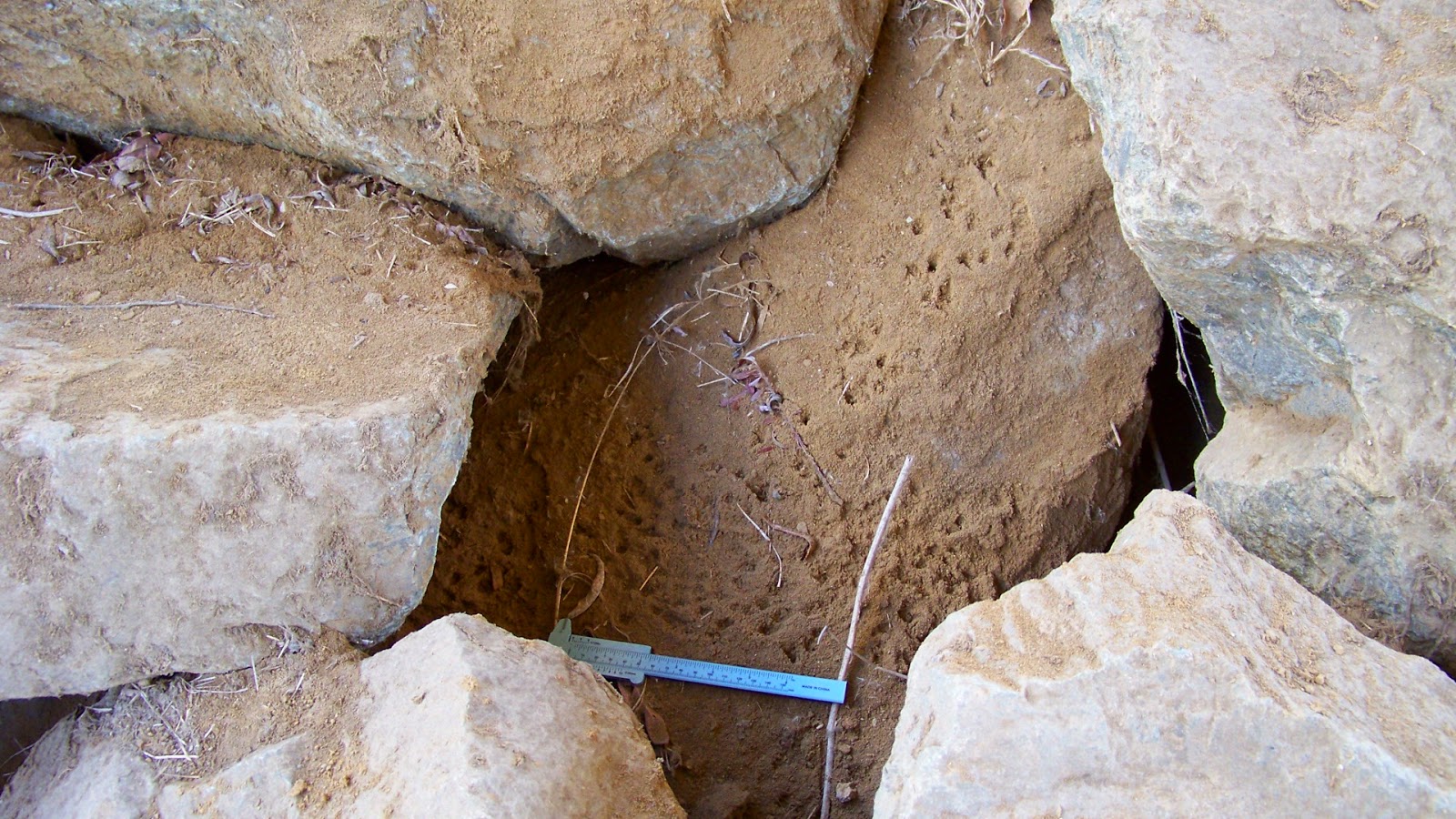
This ground squirrel was shot last year on Mother's Day at a mobbed La Jolla Shores beach area. The footprints were taken further up the coast later in the year at an intensive tracking training workshop north of Torrey Pines State Park. The footprints were left by a busy ground squirrel scurrying among boulders and checking out possible human food tidbits left behind by a family that was enjoying a day at the beach. 

Thursday, December 31, 2015

Tracking A Wild Beetle at Border Field State Park


Thursday, October 22, 2015

Snowy Egret at Miramar Lake, San Diego

Sometimes I travel a great distance to see wildlife, but it's really all around us in San Diego. One of the local gems in my community is Miramar Lake.  On a recent visit, I was focused on birds and was delighted to capture this Snowy Egret foraging for food in the shallows at the edge of the reservoir. In the top photo, the egret had been stalking fish, I presume, but when I looked at this photo, the bird's neck or skin under the neck seemed to be either filled with something, inflated, or bunched up under the head. It could also have been a strange camera angle; the bird was on the move when I took the shot. Did he catch something and swallow it? Also, it appears that the other birds are respectful of the egret although I never saw it attack another animal.  


Monday, March 23, 2015

Bighorn Sheep at Anza Borrego - Walking Gait and Foraging

In my focus on tracking wildlife, sometimes I forget to look for the living animals that make the signs I look at. These days I pause much more to listen for unusual and identifiable sounds (in Palomar Mountain State Park recently, I was able to hear wild turkeys calling though I couldn't see them across the valley) and to see some of the wildlife I've never seen before. I previously posted some views of Bighorn sheep, and here are a few other videos of the sheep in action by the parking lot at Anza Borrego State Park. This one is of the walking gait of Bighorn Sheep on the desert floor, and the following one is of bighorn sheep foraging. Hope you enjoy these views - my first at close range.


After the sheep left, my husband and I did try to make out tracks in the sand, but other than having just seen the sheep walking there, it was virtually impossible with our still unskilled eyes to recognize the sand indentations as sheep vs. any other kind of animal. I'll keep practicing, though.

Monday, March 16, 2015

Even the Sure-Footed Slip…


Here is some footage I was lucky to capture. A tired mama bighorn sheep comes back from a foraging bout to feed her lamb. She was clearly laboring as she zigzagged up the canyon wall to a safe location where her lamb bounced down the slope to nurse briefly.

Friday, January 23, 2015

Animal Tracks Under an Overpass


Under the overpass of Sorrento Valley Boulevard above Los Peñasquitos Canyon Preserve, there were many more treasured footprints including my first clear bobcat prints. There are also some bird and raccoon tracks evident. I am still trying to figure out the very small sets of tracks. If you can identify, comments are welcome. 

 
Bobcat
             

Raccoon
Small deer? over cricket

Mouse?


Mystery feet

Wednesday, January 21, 2015

Tracking the wild beetle, earthworm, and snail

 
Recently, we went on a tracking "expedition" starting at the west end of Los Peñasquitos Canyon Preserve, San Diego, CA. Right under an overpass,  we found numerous tracks. The top two photos are perhaps of darkling beetles. The middle two show the trail of an earthworm. We estimated one trail to be about seven feet in length. Why would an earthworm cut across a dirt trail? It definitely leaves a distinctive mark, but I would not have imagined this creature was the creator.


Lastly, the trail of a snail! To get this photo, I had to stand in the middle of the road to protect the animal from being run over by the numerous trail bikers cruising along, oblivious to the life forms crushed beneath their wheels. After I moved a short distance down the trail from the worm, it was immediately hit and left writhing on the ground. At least, it is immortalized here on this page.

NB: The following comment was made on FB regarding my guess that the trail in the top two photos was made by a beetle. They could also be tracks of a cricket according to K. C. "Crickets tend to have the middle feet sticking out perpendicular to the trail, rather than at an angle like beetles. That's why I think it's a cricket rather than a beetle." 

Thursday, January 15, 2015

Palomar Mountain State Park, California - The Weir


The Weir (1)


I've been collecting photos of my favorite local mountain retreat over several years. In 2012, Palomar Mountain State Park was scheduled for closure by the state of California. I am so grateful that with the help of many individuals like my family who were willing to put up funds to keep the park maintained, Palomar Mt. State Park managed to stay open.  Then there were the "discovered" funds that helped to bring back all the state parks. Today, we can continue to visit this special spot nestled in the forests of San Diego County. 

The "Weir" is my favorite spot to "hike" to - I say "hike," but it's actually a short 1.2 mile up and down walk along a gently flowing stream to reach this historic spot, travelling through pine, spruce, and oak, out into a small sunlit patch of "beach" near a stream crossing, continuing on to a small cove-like area (see above) which perpetually changes with the month and season. 

This shot was taken in November 2009 in the late fall. As you can see, the fish pool was nearly dry.

In the second photo, you can see how the look of the place can vary depending on the year, too. This shot was taken two years later but about the same time of year in the fall. It looks like we got quite a bit more rain in 2011, or it else it just wasn't as hot in the early fall.

The Weir (2)
In the next set of photos (3), you can see the Weir in the winter. There is still color there, but it is subtle. I lucked out because the sky was clear and bright with some wispy clouds. That wonderful light created outstanding reflections in the Weir.

In the last set of photos (4), you can see the Weir in summer green. Verdant. As you view the Weir in different seasons, I hope you will want to visit and  know this small mountain paradise better. Enjoy the photos! Get up here and see it with your own eyes.

I will be putting up some more photos, to give you an idea of the wildlife you might see or encounter on the trail and what other areas of the park look like.


The Weir (3)


The Weir (4)

Saturday, April 12, 2014

Grasshoppers and other insects of Anza Borrego Desert State Park, California

Xeracris minimus (Least Desert Grasshopper)
I've been to the desert many times, usually looking for wildflowers, mammals, or birds. However, recently my husband and I walked off trail behind the desert park's Visitor Center, looking as usual for animal tracks or scat. While we did find some of those, we also paid attention to the insects that abound out there. Some of them like this small white-speckled grasshopper (approximately 1.5" long) and the larger-bodied one below were amazingly well camouflaged. This photo isn't mine, but it shows another astoundingly similar camouflage in a totally different form of animal - a reptile.  Mother Nature never ceases to take my breath away.

Unless these grasshoppers were moving or leaping through the air, they were nearly impossible to spot. The large brown grasshopper  blended extremely well with the dried cactus it was resting on.

Near the Visitor Center, we also spotted this very tiny green grasshopper (?) in a palo verde tree. Also, in the same tree were two different kinds of bees. At the bottom on the chuparosa is a black wasp-like or dragonfly-like creature. I've searched for a page that shows photos of insect inhabitants of the Anza Borrego Desert, but I have failed to find an identity for this striking individual.  If any viewer thinks (s)he can identify it, please leave me a comment.


Sunday, March 30, 2014

Camels in San Diego?!

Look what I found on the way to Anza Borrego Desert State Park…  I guess I may not have to travel to the Middle East to sample camel's milk.  My students tell me it's very healthy and better than cow's milk.  Back in the day when my kids were little, the San Diego Zoo had camel rides, so they may have some dim memory of the feeling. I didn't do it then, but it seems like I might have a second chance to ride a camel. Whoopee!


Here's a link for information about their tours and camel-handling classes.

Wednesday, March 26, 2014

Wildlife Tracking in San Diego

Many tracks at Los Peñasquitos Canyon Preserve
For a few years now, I've been going out and around San Diego County, learning to read animal signs like footprints, scat, and rubs.  The amazing thing is that after three hours of looking at the ground for wildlife, we come home feeling satisfied with our conquests. What were they? Sets of deer track, deer poop, a coyote scat, woodrat scat, cottontail tracks, and one hind raccoon print. What do these things look like?  Below are a set of random photos from various sites to illustrate some of my sightings. And yes, once in a while you actually see the wildlife! Then you know those pellets really did come from rabbits.

Raccoon at Los Peñasquitos Canyon Preserve
Jack rabbit at Anza-Borrego Desert State Park,
behind the Visitor's Center

Sunday, March 29, 2009

Wonderful Webmakers in the Garden


Here are a set of photos (above) shot on the same summer day (2008). A spider captured and bundled up a moth. The whole capture and carry procedure took a few minutes, and I considered myself fortunate to have gotten some good close-ups without a macro lense.


Later in the evening of the same day, I again lucked out in that I was able to capture this hardworking spider. This spider had great markings, but looked distinct from the ones above on the plants. I know little about spiders. Does anyone know if color and markings indicate another species of garden spider? How much phenotypic variation is there, and is it significant?

Sunday, May 18, 2008

Spring Blooms in Our Garden

If you've followed me on Twitter, you know that sometimes the garden surrounding our house is foremost on our minds. At the beginning of spring, weeds were a major stumbling block after the winter rains. We discovered that when weeds had taken over the paths surrounding our planters, we could wipe them out without using poisonous weedkillers. Instead we used a square-nosed shovel and scraped them off. After about two weeks of work, we had almost weed-free paths.
Now we've got a bunny in our yard that feeds almost exclusively on weeds in the DG (decomposed granite) and on any grass that takes hold in our planters. I never thought we could have a symbiotic relationship with rabbits.


These are photos of our front yard in full bloom. When Mickey works out front, he gets many compliments on how well it's doing.


Last weekend, we had a woman ask us who did and does our yard. Well, the landscapers that are no longer in business did the hardscape and planted some of our plants, but after about eight months of unreliable maintenance on our yard, we keep it up on our own. So far, so good.

Almost all the plants are on a drip system. In addition, most of the plants are drought-tolerant, such as Salvia, Ceanothus, and Kangaroo Paw. We've got an assortment of lavendar plants, dwarf bottlebrush, daisies, heavenly bamboo, and in the back, some camellias and azaleas.

Shortly, I hope to register our garden with the National Wildlife Federation. I'll write about how to do that in the future.

Sunday, March 16, 2008

Anza Borrego in Bloom, Spring 2008

These photos are stacked on top of each other. I'm still trying to figure out a better way to display them as a slideshow. I tried 'Photobucket' but didn't like having to make all my photos public. To see the pictures in full view, just click on the photo. Enjoy!


If you live here in San Diego, you know that this is the season to get out to Anza Borrego to see the desert in bloom. With all the rain this winter, we were guaranteed a spectacular display of wildflowers. I went twice over a three week period and am so glad I did. Not only did I see this precious work of Mother Nature, but the second visit helped me a little to overcome this heaviness of heart in losing Shadow. The desert and the mountains are wonderful outdoor cathedrals of worship and comfort.